Great Mosque of Demak already five centuries old, built by the Wali Sanga in the Kingdom of Demak under the leadership of Raden Patah, as sites of power and heritage for all of the king and the land of Java. Now building the mosque has been confirmed as objects of cultural heritage and protected by law.

Masjid Agung Demak
Museum of the Great Mosque of Demak was standing beside the mosque. Museum collections consist of drum and gong Wali the 15th century, a piece of wood from sakatatal Sunan Kalijaga, the book of Quran Tafseer Juz work of Sunan Bonang 15-30, Door Ki Ageng Bledeg work of Sela, barrel during the Ming Dynasty, mock mosque, photo -photos, etc..
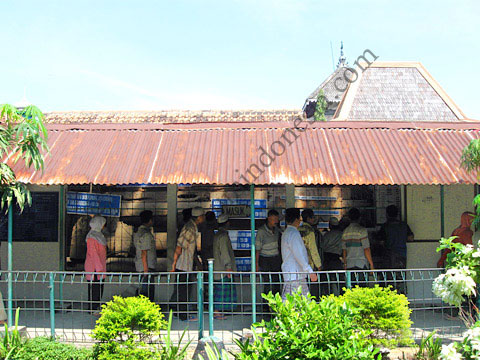
Former storage sakaguru
Is sakaguru Sunan Kalijaga who have a special name: Sakatatal. Chips are pieces of planed wood. There is a story of Babad Jaka Tingkir on a day determined to build a mosque. Sakaguru are delegated to the Sunan Kalijaga still not visible. Sunan Kalijaga himself engrossed in Pamantingan tirakatan. Sunan Bonang then summoned and reprimanded him. Sunan Kalijaga then collect the splinters of wood, the remnants of sakaguru, poles, beams that have been finished. Arranged to form a pole, then with the spiritual power to compress the entire debris pile intact. Thus the flow from one generation to the next generation of the so Sakatatal overnight.
I, too, was one of those that will not bear to mention the story of this legend. Because of its beauty touches the heart. If only I was also given the grace to believe, but perhaps understood in other ways is a form of grace as well. Some time after returning from the Mosque of Demak, I did try to find a way for me to understand Sakatatal.
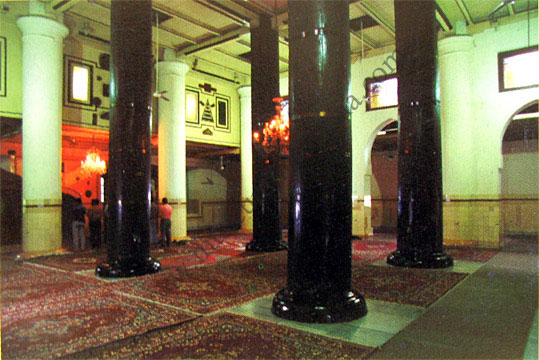
Four sakaguru in Demak Great Mosque(Source: Brochure Great Mosque of Demak. Inside the mosque is prohibited photographing)
Perhaps, some answers contained in the following paragraph quoted from Nancy K. Florida (Writing the Past, Inscribing the Future, 1995).
The architect is the Wali Sanga Mosque, while delegating the division of tasks that involve all stakeholders in its development. The Mayor to build four pillars (pillar or column major), the guardian after Wali Sanga saka pangendhit, clergy and other spiritual elite saka swamp, while the duke of providing primary beam, the royal family and other nobles of secondary beams and roof truss. Military elite provides the framework supporting the roof and fence. While construction of the shingle roof coverings (thin pieces of board to the roof, usually made of wood) on the basis of sami urunan kewala, namely the contribution from the people.
This architectural plan of the scheme reveals a neat hierarchy of authority. At the highest point is the Wali Sanga, and other spiritual elite, and the duke and the royal family sat in relation to each other (read: support) in sosialpolitik structure. Spiritual elite with masts that stand vertically and elite palace with transverse beams horizontally. Military fence responsible for building and securing the border guards. While the people, 'The' people 'come last, in a multitude of undifferentiated' everyones'; They seemingly 'just chip in' to cover over the structure and to Provide its mass. " (Florida, 1995)

Tatal Sunan Kalijaga
Perhaps it is nothing more colliding with a rigid hierarchy of authority comes from reality instead of pieces ...
...
Kalijaga, is perhaps the most beloved Sunan. I think, from a figure, because he loved the most in is because he is siding, but the 'pieces' ... the little people, is wasted, and keberpihakannya, containing sincerity and heart.
Ah yes. Today, let me want to feel if this is the legacy bequeathed Sunan Kalijaga to the kings of the entire land of Java. Heritage, for each of us as well.
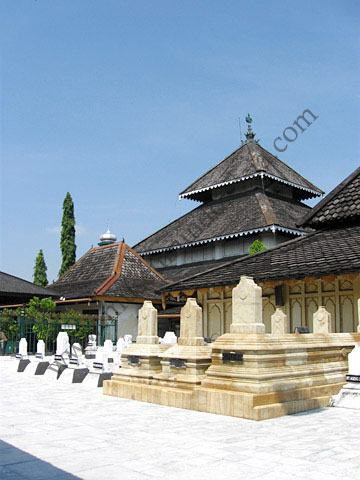
Tomb of Raden Patah (far right)
The one that stole the attention for those who are familiar with Reverse Flow is the tomb of Prince Seda Lepen (second son of Raden Patah) because Pram had called it in Chapter 27, 'Portuguese partying again in Malacca, also in Pasai, knowing that Trenggono can rise to the throne only with the carcass own biological brother, Prince Seda Lepen ... '
The same Muljana Prof.Slamet stated, 'In the Babad Tanah Jawi, mention that Prince Seda Lepen killed by Sunan Prawata, the eldest son Trenggana ... Presumably, Seda Lepen aka Prince Raden Raden Kikin is an obstacle to Trenggana ... to inherit the imperial throne Demak sepeninggalan adipatu Jonah ... why because Raden Raden Kikin older than Trenggana. However, Raden Kikin birth of his third wife, while Raden Trenggana birth of his first wife. That is why Sunan Prawata menyirnakan Kikin, aka Prince Raden Seda Lepen '(The collapse of the Hindu-Javanese kingdom and the emergence of Islamic countries in the archipelago, 2005).
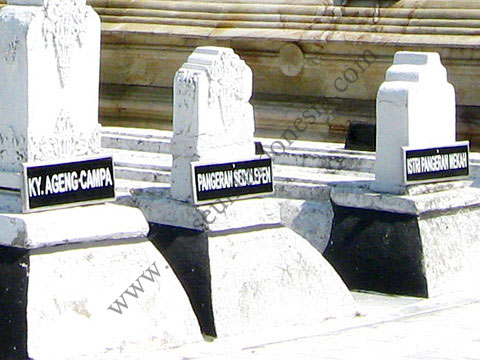
Tomb of Prince Seda Lepen (middle)
Seizing the throne, fierce disputes harm each other, do not even have been started since Antaga and Ismaya fighting position as successor to Sang Hyang Tunggal ...Perhaps, being a small, everyday people, always, is the fact a boon. Perhaps it should not ever celebrate our common people.
http://www.museumindonesia.com


0 komentar:
Posting Komentar